
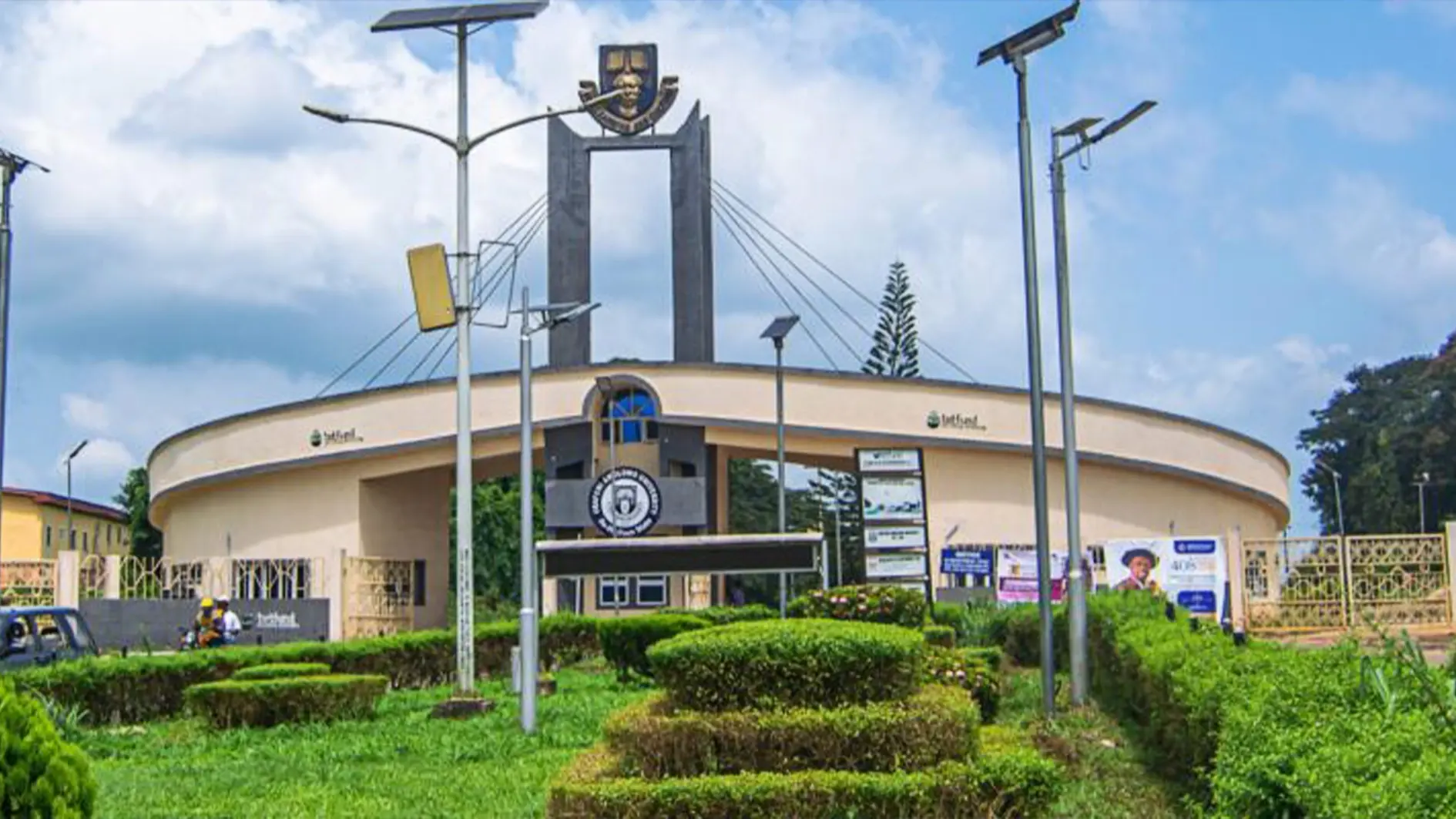
After my first attempt to gain admission into Obafemi Awolowo University failed in 2014, I resolved to attend a polytechnic as the available option at the time. I applied to study Mass Communication, having a background in the Arts from secondary school. However, as fate would have it, I was offered Business Administration and Management Studies by The Polytechnic, Ibadan.
We were the last batch sent to the Eruwa Campus in 2014, as the two mini-campuses, Saki and Eruwa, had received their autonomy but were yet to commence full-time courses.
Remember, my background was in the media, while my dream course was Mass Communication. Although I was offered Business Administration, I accepted it, and that was how a new journey in the field of Business Administration began.
My first year at the Eruwa Campus was focused solely on my new course of study, but I was not comfortable. I knew I did not belong there. Most of my friends were in the Mass Communication Department, and I also intentionally made friends within the department just so I could have access to what they were doing.
Towards the end of my first year, something happened in the school, which I will explain in subsequent editions. That event eventually set me on the path to journalism.
Firstly, I joined the Eruwa Press Council, and that was the beginning of everything journalism-related for me.
There, I learnt news writing and reporting, weekly production, investigative reporting, and other aspects of journalism, as everything we did at the time was traditional media.
In 2016, I made another attempt to gain admission into Obafemi Awolowo University, and I was successful. However, as was characteristic of OAU at the time, we could not resume until April 2017. Specifically, I resumed at Angola Hall on April 31, 2017.
As we know, until recently, OAU did not have a Mass Communication Department, but the university has produced many student journalists who have made names for themselves and the university, extending their impact beyond the campus.
On getting to OAU, I did not initially have plans to pursue anything journalism-related. My main interest was Students' Unionism and leadership. Unknown to me, however, I was wrong because a campus is like a state of its own, and it cannot function effectively without a vibrant press.
For this reason, I decided to join the press, with the mindset of putting Students' Union leaders and officers, as the OAU case may be, on their toes.
In my first year, I started reading the works of Adejumo Kabir and other student journalists on campus to understand how the media could be used to checkmate the activities of Union officers. I did this for a very long time until I joined Eagle's Post News as a founding secretary.
I later rose to become the Editor-in-Chief before stepping down when I was elected President of my department.
Eagle's Post News was founded as an independent media outfit primarily to check the activities of the school management. At the time, the Students' Union had been proscribed, and different groups had sprung up to defend students against some perceived draconian policies of the school management.
Eagle's Post also took it upon itself to complement the efforts of these groups and expose what we considered to be illegal actions by the school management, especially as they related to the suspension, arrest, and imprisonment of students who opposed its policies.
I was also able to secure a place for myself at my faculty press, Ife Educators News Agency. My support for my friend, who was then the Editor-in-Chief of the News Agency, earned me the position of Deputy Chairman of Ife Educators News Agency when he became the Public Relations Officer of the faculty.
During our tenure, we changed the face of journalism in the faculty.
Firstly, training and retraining of our members became our priority. We also improved the Ife Educators News Agency website, which had been developed during his tenure as Editor-in-Chief.
Finally, on Ife Educators News Agency, we were the first to introduce real-time broadcasting, which was the first of its kind at the time. We trained some members in the rudiments of broadcasting and increased the capacity of the IENA website/app to accommodate audio production.
News was broadcast in Yoruba, English, and Pidgin, while yours truly was the lead Yoruba presenter.
Looking back, my journey into journalism was never straightforward. With a background in the media, I applied for Mass Communication but was offered Business Administration, yet I didn't give up on journalism. Every turn, from Eruwa to Ife, from Business Administration to broadcasting, became a building block.
If there's anything my path can teach you, it's that you shouldn't let a closed door define your future. I was denied Mass Communication, but I found my way back to journalism through the Eruwa Press Council.
Another one is that you should get the skill, not just the title. I learned news writing, reporting, and production long before I held any formal journalism title, by joining a press council, by getting close to my Mass Comm friends, and by reading student journalists like Adejumo Kabir to understand how the media could be used to hold authority accountable.
Also, do the hard work and let the title follow. My rise from founding secretary to Editor-in-Chief at Eagle's Post News, and later Deputy Chairman at Ife Educators News Agency, didn't come from ambition alone. It came from consistent contribution.
Finally, be open to innovation. Introducing real-time broadcasting at IENA was our effort toward innovating. It came from seeing a gap and building the capacity to fill it.
But these lessons are not just about me. They point to a bigger responsibility that falls on every student journalist. Student journalists have a great role to play in campus affairs, especially in student-to-student, student-to-lecturer, and student-to-management relationships.
You have a duty to ensure that students have access to timely information, are informed about educational policies from the government and school management, and that the voices of students are heard at all times.
My journey proves you don't need a perfect start. Get to work now!
Leave a Comment