
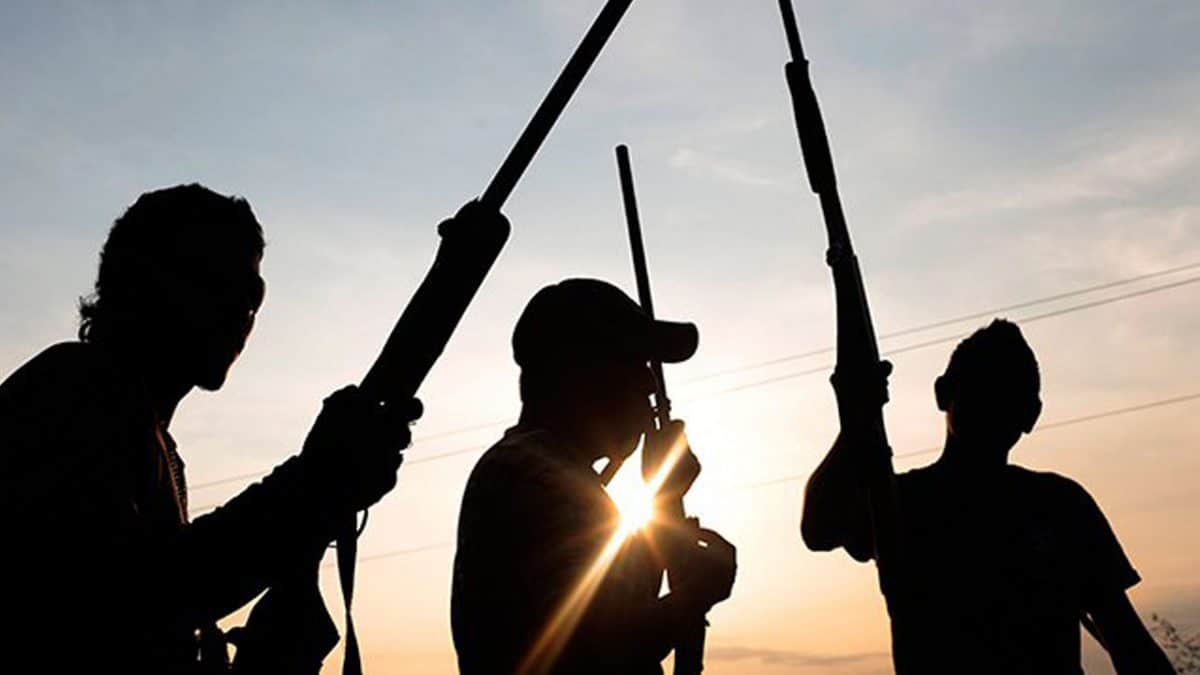
Nigeria's insecurity did not begin with the administration of President Bola Tinubu. When he assumed office in May 2023, the country was already confronting terrorism in the North-East, banditry and mass kidnapping in the North-West, communal violence in the North-Central region and other forms of violent crime across the country.
But the passage of time has placed a different responsibility on the Tinubu administration: not simply to respond to the insecurity it inherited, but to demonstrate that its policies, spending and security interventions are reducing the human cost of violence. However, the record since 2023 presents a mixed picture.
The government has expanded security spending, recruited additional personnel, deployed troops, changed security leadership, made progressively larger budgetary allocations, intensified counter-terrorism operations and reported significant successes against insurgent groups. Yet deadly attacks, abductions and civilian casualties have continued, with some indicators worsening in 2026.
Although considered an inherited situation, the assessment of an administration's security record cannot end with what it inherited. It must also consider what changed while it was in office. That is where the record becomes more complicated.
By 2026, Nigeria was still recording mass killings, attacks on military positions and widespread kidnapping. According to a report in August 2026, armed groups had killed more than 10,000 people since Tinubu took office, while mass abductions remained a major concern.
The question, therefore, is not whether the administration has responded. It clearly has. The question is whether the response has been sufficient to reverse the danger.
The events of February 2026 provided one of the clearest tests of Nigeria's ability to prevent attacks before they happen.
On February 3, terrorists attacked Woro and Nuku communities in Kaiama Local Government Area of Kwara State, killing more than 170 people, while others were injured or abducted. The tragedy was made more troubling by claims from members and leaders of the affected communities that authorities had received warnings before the attack.
Community representatives said warning letters had been sent months before the incident, with another warning reportedly issued about two weeks before the attack. Yet the communities said adequate security protection did not arrive before the terrorists struck. It was only after the massacre that President Tinubu ordered the deployment of an Army battalion to the area.
The sequence raises a fundamental question about Nigeria's security architecture: what happens between receiving intelligence and acting on it? Deploying troops after an attack may restore some level of security, but it cannot restore the lives already lost.
The Woro and Nuku attack therefore exposed a problem that goes beyond troop numbers. A functioning security system must not only possess information about an impending threat; it must have the capacity to convert credible warnings into timely preventive action.
The government's subsequent rescue of 163 people abducted from Woro in August demonstrated that security agencies can achieve significant recovery operations. President Tinubu described the wider operation, which rescued 308 abductees, as the country's largest single-day rescue operation and praised improved coordination among security agencies.
The security challenge became even more troubling in March, 2026 when the violence reached Nigeria's military formations. The Jihadists reportedly attacked and overran four military bases in Borno State, killing at least 65 Nigerian soldiers. The attack came after the government had already demonstrated its willingness to deploy more troops in response to major attacks.
This suggests that the problem cannot be solved simply by increasing the number of personnel. The government has responded by approving the expansion of the Nigerian Army from eight to 12 divisions and the recruitment of 28,000 additional personnel, alongside plans to strengthen equipment, operational readiness and troop welfare. Yet insurgents retained the capacity to mount coordinated operations against military positions in the heart of Nigeria's long-running insurgency just like we have in the earlier month of the year when we have security analyst taking note of the strategic attack from groups like Boko Haram and ISWAP mounting rapid, multi-pronged assaults on fixed military installations in Borno and Yobe states.
The contrast between Nigeria's security crisis and the normal continuation of political and social life is also another alarming concern that questions the stance of the government in curbing or finding a final solution to the continuous loss of life in a lethal way that could be avoided.
On February 6, Abuja hosted an elaborate six-day wedding celebration organised by the then junior Defence Minister, Bello Matawalle, who married off five sons and five daughters attracting prominent political figures, including President Tinubu.
At around the same period, nine teenagers were reportedly abducted in Benue State, with their captors demanding N30 million for their release.
In Kwara, meanwhile, families were preparing for mass burial following the terrorist attack that had killed scores of people only days earlier.
The simultaneous events reflected the sharply different realities experienced by Nigerians across the country with a government body that seems to be unbothered as long as they are not affected.
A military airstrike conducted in the North-East as part of efforts to target Islamist militants reportedly affected civilians around the Jilli weekly market.
Traders and shoppers were reportedly present in the area, while residents from Geidam Local Government Area, which shares a border with Gubio Local Government Area of Borno State, were also reportedly among those affected.
The government's objective of eliminating terrorist targets is understandable in a country facing a prolonged insurgency. But the legitimacy and sustainability of such operations also depend on protecting the people living in conflict zones. Of which questions the body's priority. Keeping lives or protecting them.
Nextier's Nigeria Violent Conflicts Database recorded 156 violent incidents, 842 deaths and 279 kidnapping victims during the month. Compared with May 2025, violent incidents increased by 51.5 per cent, fatalities rose by 90.1 per cent, while kidnapping victims increased by 19.7 per cent.
The figures cut across the different forms of insecurity confronting Nigeria: terrorism, kidnapping, banditry and communal violence.
They also provided an important counterpoint to the government's claims of military progress.
A government can achieve operational successes against terrorist groups while the broader security environment remains dangerous. But when violence, deaths and kidnappings rise sharply over a comparable period, the government must explain why its wider interventions have not produced corresponding improvements in citizens' safety.
A June assessment citing Nigeria Watch data recorded 5,272 deaths from violence-related incidents between January and May 2026.
The continuing violence was concentrated in several states, including Borno, Benue, Zamfara, Plateau, Katsina, Taraba, Niger, Kwara and Kebbi. Borno remained a major centre of jihadist insurgency, while other parts of the country continued to face kidnapping, banditry and communal violence.
The cumulative figures matter because they show that the problem is not simply a series of isolated security emergencies. It is a persistent national challenge that continues to consume lives, displace communities and damage livelihoods despite spending on prevention.
Perhaps the clearest accountability test for the Tinubu administration is the amount of public money committed to security. Nigeria's 2026 budget allocated ₦5.41 trillion to defence and security, described by President Tinubu as the country's largest-ever allocation to the sector.
He also pointed to the recruitment of more than 50,000 police officers and thousands of military personnel as part of the administration's response to insecurity.
If more money is being allocated but communities continue to face deadly attacks, military bases remain vulnerable, and kidnapping figures rise, Nigerians are entitled to demand greater transparency about how security resources are being deployed and what plans and outcomes are put in place and expected, respectively.
The issue is not whether the government should spend more on security. It clearly must. The issue is whether spending is being converted into better intelligence, faster response, stronger community protection, better-equipped personnel and fewer deaths.
President Tinubu's 2026 Democracy Day address provides the administration's strongest defence of its security record. Acknowledging the abduction of children in Oyo and Borno, the President said: "Democracy without security is not solid enough."
He pointed to the declaration of a security emergency, the recruitment of more than 50,000 police officers and thousands of military recruits, as well as the ₦5.41 trillion allocation for defence and security.
Tinubu also said the country had moved from training with international partners to precision targeting, citing the degradation of an ISWAP command centre in Arege, Borno State.
He claimed that terror-related deaths had fallen by 81 per cent since 2015, while more than 13,000 terrorists had been neutralised in the preceding year. He also said more than 124,000 fighters and dependents had surrendered since 2023 through Operation Safe Corridor.
These claims cannot simply be dismissed. They point to genuine government interventions and reported operational gains against terrorist organisations. However, they also need to be examined alongside the wider security picture and the continuous increase of death rate as each day goes by.
The central challenge in assessing Tinubu's security record is that two realities can exist simultaneously.
The military may successfully target terrorist commanders, destroy operational bases, neutralise fighters and facilitate the surrender of insurgents. At the same time, communities may continue to face kidnapping, communal violence and terrorist attacks.
The two measures are related, but they are not identical.
A military victory over a particular terrorist target does not necessarily mean that a farmer in a vulnerable community is safer, that a child can attend school without fear of abduction or that a village can rely on timely protection after issuing a warning.
That distinction is crucial to Tinubu's own Democracy Day argument. If, as the President said, democracy cannot be solid without security, then the administration's security performance must ultimately be measured not only by battlefield statistics but by the everyday experience of Nigerians.
The evidence from the first half of 2026 suggests that Nigeria's security challenge is no longer simply about whether the government is responding. The harder question is whether the system is becoming sufficiently preventive and whether government response is yielding positive results that protect lives and not lose more.
The Woro and Nuku attack illustrates the importance of early warning. The Borno military attacks demonstrate the need for stronger intelligence and military preparedness. The Jilli airstrike highlights the importance of civilian protection. The May figures demonstrate the need to measure security outcomes beyond individual military operations. Beyond the practical response of the government, what is needed is a working solution that is effectively attacking threats early enough to prevent them.
The evidence of happenings continues to present a mixed record: military successes exist alongside continuing mass attacks; increased funding exists alongside rising concerns about implementation; additional personnel recruitment exists alongside more vulnerable communities; and counter-terrorism operations exist alongside concerns about rising numbers of deaths and casualties of civilians.
The Tinubu administration cannot fairly be described as having done nothing about Nigeria's insecurity. It has acted. The problem is that the scale of the response must be measured against the scale of the outcome. This means the most defensible assessment is neither that Tinubu has solved Nigeria's security crisis nor that his administration has offered no solutions.
Rather, the evidence suggests that the administration has expanded the state's response to insecurity but is yet to demonstrate that the expansion has consistently produced the level of safety Nigerians expect.
Nigeria's security debate is increasingly filled with large numbers: trillions of naira, thousands of recruits, thousands of terrorists reportedly neutralised, thousands of people surrendering and hundreds of people killed or kidnapped. But behind every figure is a person.
The consequences of Nigeria's security situation are ultimately reflected in the lives and livelihoods affected by violence: children unable to return safely from school, farmers facing difficulty accessing their farms, soldiers deployed to increasingly dangerous areas, families waiting for abducted relatives, and communities dealing with deaths following attacks.
This emphasizes a more focused view on the Tinubu administration and its security strategy broader than the amount of resources committed or the number of military operations conducted. The relevant question is whether these interventions are translating into improved security outcomes for Nigerians. President Tinubu has himself acknowledged the connection between security and the effectiveness of democracy, stating that "Democracy without security is not solid enough."
However, the evidence from the first half of 2026 shows that these interventions have continued alongside attacks, casualties and displacement in several parts of the country. This does not mean that the government has taken no action; rather, it raises questions about the effectiveness, implementation and preventive capacity of those measures taken.
Ultimately, the effectiveness of these observed taken measures and strategy will be reflected not only in the government's response to insecurity, but in whether those interventions can reduce attacks, casualties and the number of Nigerians whose lives and livelihoods are disrupted by violence.
Leave a Comment